

The New Post-AI Consumer Journey
How brands can build trust in an AI-saturated world.

I was in Uruapan, Mexico, enjoying a Day of the Dead parade organized by a local middle school, when I got the email:
“Are you available for a Zoom call in an hour?”
My colleague, the graphic designer who I’d been working with for our content marketing campaigns, had been laid off earlier that day via a Zoom call, so I knew what was coming.
I made my way to the nearest Starbucks, got my dark roast coffee of the day, and sat down at a table as far away from anybody as I could.
When I logged on to the call, there was my manager, together with the HR lady.
My heart sank.
I can’t remember the words he told me, but it was some version of a rote speech that went something like, “While we value your services, we’re cutting costs. and your position has been eliminated.”
I think you know the drill.
After getting over the disappointment (hey, I’ve worked in tech my whole life. Layoffs are nothing new), I decided to enjoy the rest of my stay in Mexico with my wife.
I was part of the first wave of AI-generated layoffs.
That moment initiated my journey as an AI-forward marketing consultant. And the irony wasn’t lost on me that the content my former company started creating was AI-generated.
The AI Trust Apocalypse
Joe Pulizzi, founder of the Content Marketing Institute (and The Tilt), has been sounding the alarm about AI permanently changing content as we know it.
After attending MAICON, the premiere AI marketing conference organized by the Marketing AI Institute, Joe saw something he could not unsee: a future completely dominated by AI content.
His working philosophy for the current moment: make your mark in content, build your community, your media company, your newsletter, before it’s too late.
He says, “We have two to three years max to do it before it’s too late.”
Just yesterday, he published an article in which he stated:
“...human-created content is about to become the minority...[w]e can already see it happening. AI-generated articles are everywhere. Synthetic influencers are building audiences. AI-generated music is finding its way into the culture. Bots are building OnlyFans pages and making millions. None of this is some far-off prediction anymore. It is here.”
His solution? “...in a world where synthetic content is everywhere, another person trusting you becomes the moat.”
I think Joe hit on something here, but I think it’s more than that.
Let me explain…
The Four Marketing Eras
Before I get into what I believe the solution is, let’s recap the last 75 years of marketing.
I believe there have been four eras.
1. The Era of Reach (1950s - 1990s).
This was the television era (and also the radio era….maybe that era started in the 1920s?).
Could you reach your consumers via television, radio, newspapers, magazines? Could you pay enough money to reach the maximum number of consumers to be successful?
2. The Era of Attention (1990s - 2024)
This was the era we all know and love. The internet removed all the gatekeepers. We no longer had to pay the TV networks, newspapers, billboards, and magazines to reach our audience.
We could reach our audience directly: through blogs, social media, YouTube, search engines.
3. The Era of Trust (2026 +)
This is the era we’re in right now. We don’t trust the content that’s out there anymore. Even bots “...are building OnlyFans pages and making millions,” as Joe said in his article.
Our timelines are filled with AI Slop. Google’s search has been replaced by Google Answers.
4. The Era of Belonging
But what I really feel is that we’re in the era of belonging. It’s more than trust. It’s identity, it’s belonging.
Think about Harley-Davidson. Think about the Salesforce ecosystem, and the thousands of businesses that exist today because of Salesforce. Think about Kit, and all the creators who see Kit as more than just an email marketing tool, but the caretaker of a creator community.
The New Marketing Funnel
The current moment requires a new funnel, a fundamentally different funnel.
The old, familiar funnel, sometimes referred to as the “buyer’s journey,” was something like this:
Awareness
Interest
Decision
Purchase
And it was extended by Ryan Deiss and Russ Henneberry at DigitalMarketer.com with:
Convert
Excite
Ascend
Advocate
Promote
This was a beautiful model, because it described how a company could go from unknown to profitable in a systematic way.
But it was all predicated on content - human-generated content.
If I, as a marketer, took the time to write an article from my vast well of knowledge that taught how to do something, I could generate trust with my audience.
Content was the trust mechanism.
No more.
Now AI can do it all, and consumers know that (we’re not dumb).
Even AI practitioners can’t stand AI content.
I was at an AI meetup a couple of weeks ago. After the presentation, I was talking to an AEO/GEO practitioner (ok, just picture the context: AI meetup. AI practitioner. It’s AI all the way).
The AEO/GEO expert told me, “I’m sick of all the AI Slop in my timeline.”
The irony, the irony (said in Col. Kurtz’s voice).
So if content is no longer the way to generate trust, we need a new funnel.
And I’m working on that model (it’s still a work in progress, so have patience with me).
It’s called “the identity journey.”
The Identity Journey
The identity journey goes something like this:
Transaction: I buy the product.
Preference: I like the brand.
Belief: I adopt the worldview (this is where category design comes in).
Identity: I see myself as part of the category.
Belonging: I find my people.
Advocacy: I spread the idea.
Let’s get into a little detail:
Transaction: I buy the product
I’ll use a B2C example here, even though this is a B2B-focused newsletter.
I’m a chocoholic. I love buying chocolate bars.
If I go into a store, and I see chocolate bars at the checkout counter, I’ll grab one and put it on the conveyor belt.
No big deal. If it’s Hershey’s, or some other brand, I don’t care. It’s chocolate!
Preference: I prefer the brand
Lately, I’ve been making a beeline for the candy aisle. I’ll grab a Cadbury’s Fruit & Nut bar. I’ve loved Cadbury’s since my teenage years living in England. Especially the Fruit & Nut bar.
So many of us have brand preferences: Abercrombie & Fitch. Yeti.
In productivity apps, I like Kit, WordPress, and Trello.
Belief: I adopt the worldview
Now this is where we get into the post-AI trust architecture portion of this new buyer’s journey.
After the 2016 release of the ground-breaking category design book, Play Bigger, creating categories has become an increasingly bigger deal.
But even pre-dating the book, companies like HubSpot and Salesforce led the way.
Salesforce changed our whole concept of what it meant to be a software company, from on-premise software, which was the norm up until 2000, to Software-as-a-Service (SaaS), which is the norm now
At some point, between 2000 and 2005, there was enough of a groundswell of software companies and consumers who believed that software should be a service, not a product you download and install on your computer, that SaaS became the default, not on-premise.
Same in the 2007-2009 frame, when HubSpot introduced inbound marketing. Enough companies believed that attracting clients was far better than interrupting them.
That belief changed our whole belief about marketing.
Disruptive innovations are more successful when they change our belief systems, instead of just convincing people they have better features and benefits.
Identity: I see myself as part of the category
Are you a Longhorn or an Aggie? A Microsoft app user or a Google app user?
Many times, we identify with the company and its worldview. This is not just brand preference. This is brand identity.
If you can fuse your market’s identity with a group identity, with you and your worldview at the head, you’ve successfully created a new identity where people see themselves as part of you.
Belonging: I’ve found my people
In my working theory, this is the holy grail for companies in the post-AI world. This is where trust is cemented.
I have a friend who is a Salesforce systems integrator. He is part of the whole Salesforce ecosystem. He goes to Dreamforce every year. His preferred AI is Einstein. He belongs to the Salesforce community. His identity is that of a Salesforce person.
I mentioned Kit earlier. Through their webinars, Nathan Barry’s YouTube channel and podcast, and especially through Craft + Commerce (Kit’s annual conference), they’ve developed a whole community of creators who feel at home in the Kit world.
If you can make people feel at home in your world, identify with your worldview (your category), and become a part of your community, you win!
But there’s a subtle distinction here. Belonging doesn’t happen in isolation.
You don’t belong to a product. You belong to a group of people.
A category can create a shared belief. A brand can create a shared identity. But community is where those beliefs and identities become social.
That’s why the strongest brands in the world don’t just sell products. They create ecosystems, movements, and communities where people can find others who see the world the same way they do.
And that’s where events enter the picture.
Advocacy: I spread the idea
Once your identity is fused with the community you’re part of, then you want to tell everybody about it.
Now, which company doesn’t want that?
The Role of Events and Collective Effervescence
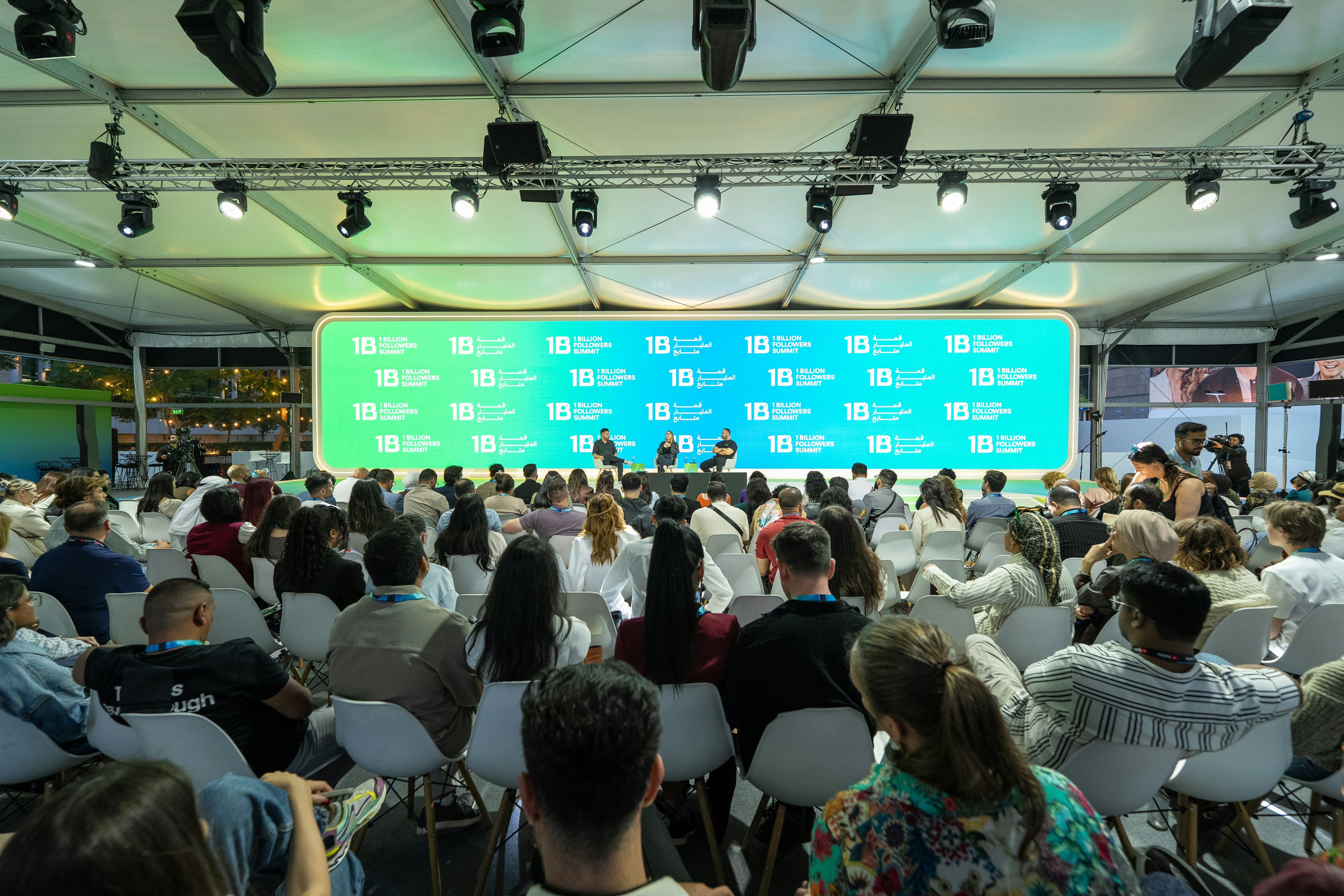
But there’s one important element missing in the “identity funnel”: events.
Let’s view the identity journey once again, but with events interlaced between the stages:
Transaction: I buy the product.
Preference: I like the brand.
Events: virtual summit
Belief: I adopt the worldview (this is where category design come sin).
Events: Conference
Identity: I see myself as part of the category.
Events: Workshop; Retreat; Mastermind
Belonging: I find my people.
Community
Advocacy: I spread the idea.
You have virtual events, conferences, workshops, masterminds, retreats, all designed to join people together on a shared journey.
But most organizers just focus on delivering a great event, leaving out a crucial detail: the role of collective effervescence in creating that belief, the identity, the belonging, the advocacy.
Collective effervescence is a sociological concept coined by Émile Durkheim. It describes the intense energy, exaltation, and sense of unity that people feel when they gather together in a group for a shared purpose, such as a religious ritual, protest, concert, or sporting event.
And it gets biological too.
When collective effervescence occurs, a fascinating biological process happens. Attention synchronizes. Dopamine, oxytocin, and endorphins increase. Emotional contagion spreads through the crowd. Individual identity temporarily gives way to group identity.
For a brief period, people stop thinking, “I am Fernando,” “I am Sven,” or “I am Xochitl.”
They begin thinking, “We are founders.” “We are marketers.” “We are creators.” “We are Salesforce professionals.”
The brain shifts from an individual identity to a collective identity.
That’s why powerful events feel fundamentally different from consuming content online.
Content can transfer information, but events can create belonging.
Conclusion
In the post-AI world, with synthetic content proliferating on your “for you page,” the websites you visit, the YouTube videos you watch, it’s impossible to know who or what to trust.
And the solution is as ancient as time. From the cognitive revolution of 70,000 years ago, home sapiens have been using myth - powered by rituals, gatherings, and ceremonies - to join societies together under a shared belief, identity, and community.
These ancient methods, baked into our DNA, are the key to what you can do today to generate that trust in the era of infinite, AI-generated content.
And I’m on a quest to research the topic. I don’t want to confirm my new “identity journey” viewpoint. That’s just my hypothesis.
I want to see where the data leads me and create a framework based on that.
And I’ll be sharing my journey here.
Come join me!